

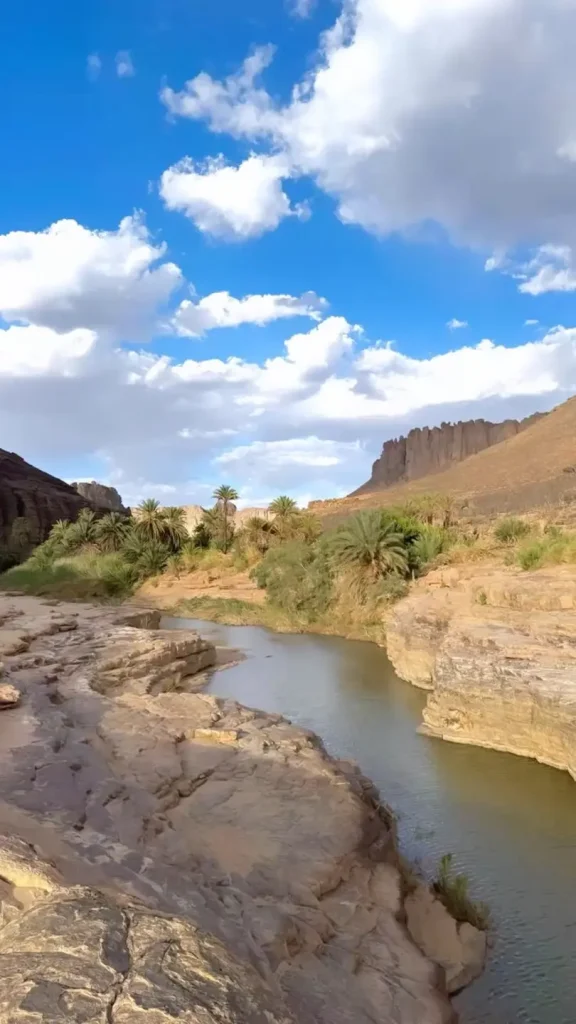
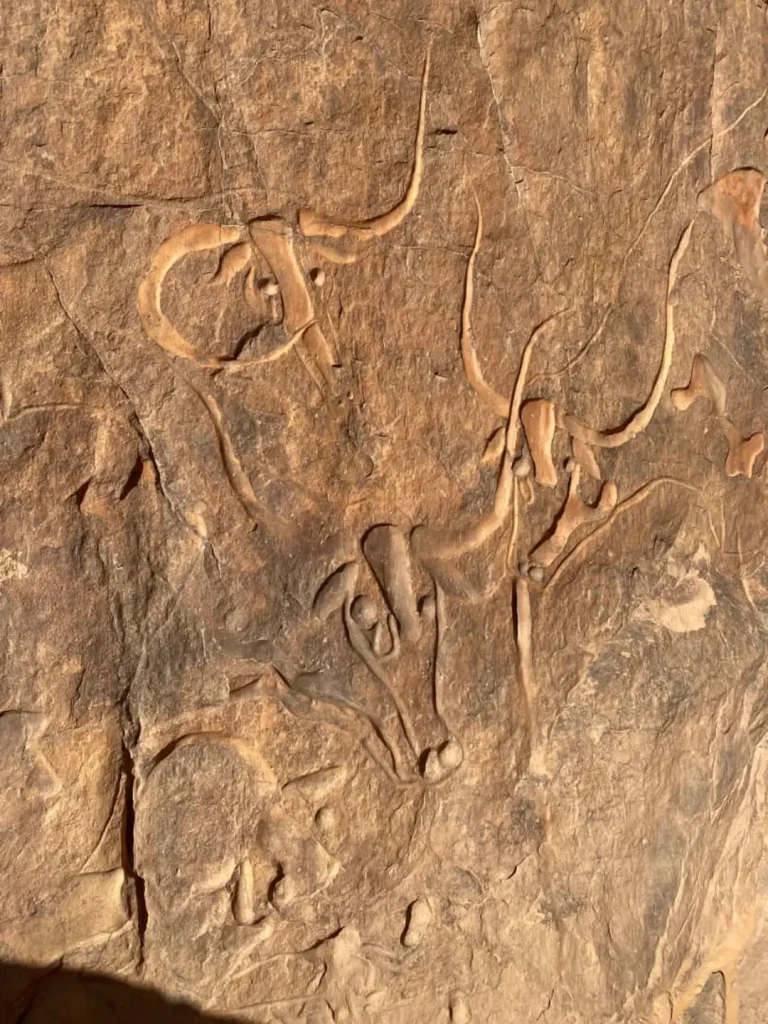
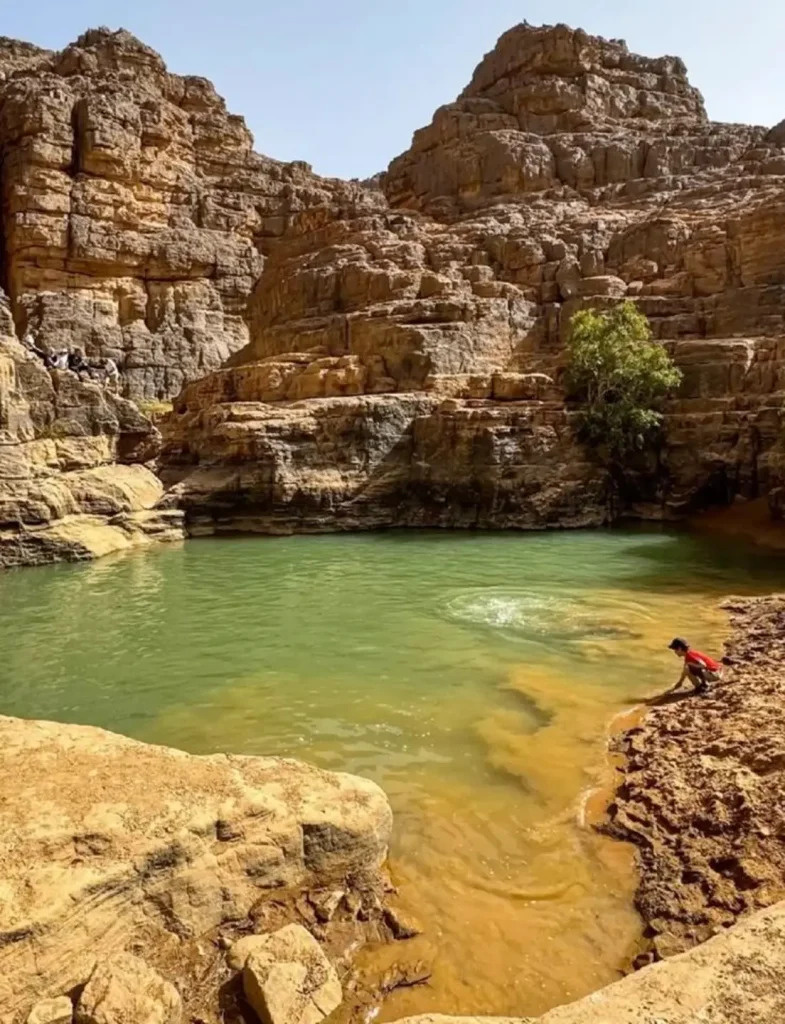
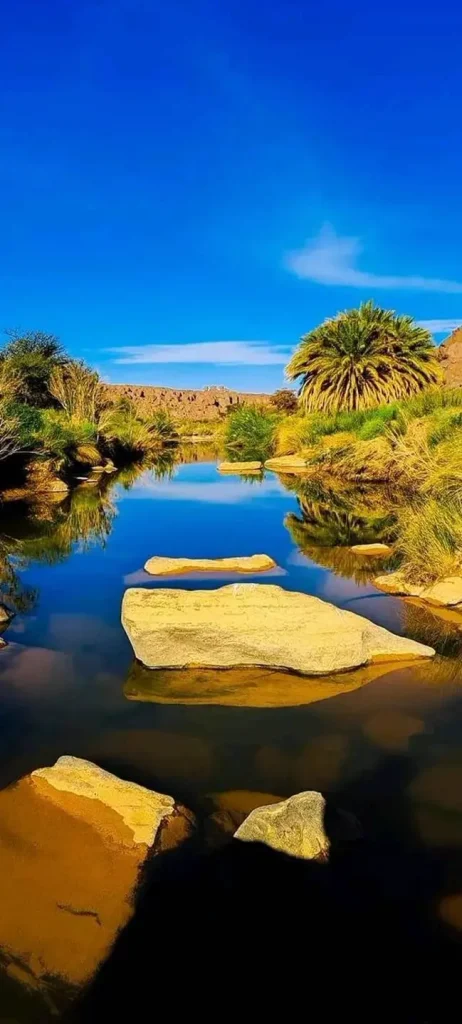
Begin with the cool shade and gentle stream of Essendilene, a hidden garden surrounded by palm trees and canyon walls. Then continue to the dramatic rock formations and prehistoric art of Tikoubaouine, where time seems carved into stone. In Imourouden, discover the silent forest of stone pillars and engraved histories of life long gone. Reach the cultural heart of the region in Djanet, a city of color, rhythm, and nomadic spirit. End in Tegharghert, home to the famous Crying Cow engraving, one of the Sahara’s most mysterious and iconic artworks.
Every step of this tour offers a different face of the desert, soft and hard, ancient and alive, quiet yet filled with stories. It’s ideal for travelers looking to feel something deeper than scenery: a connection to time, to land, and to meaning.
For those drawn to raw beauty and silent wisdom, this journey through Essendilene and Tikoubaouine is not just a tour, it’s a desert poem written in stone and sand.
Nestled at the edge of the towering Tassili n’Ajjer plateau, Djanet is the beating heart of southeastern Algeria and the perfect starting point for an adventure through the Tadrart Rouge. This oasis town, surrounded by black volcanic mountains and golden dunes, offers a captivating blend of Tuareg culture, Saharan landscapes, and ancient heritage.
Life in Djanet moves with a peaceful rhythm. Narrow streets wind through traditional mud-brick homes, palm trees line the dry wadi, and locals dressed in blue turbans and robes greet visitors with quiet warmth. The town’s weekly market is a lively showcase of desert life, where spices, dates, handmade crafts, and camel gear reflect the region’s deep-rooted traditions.
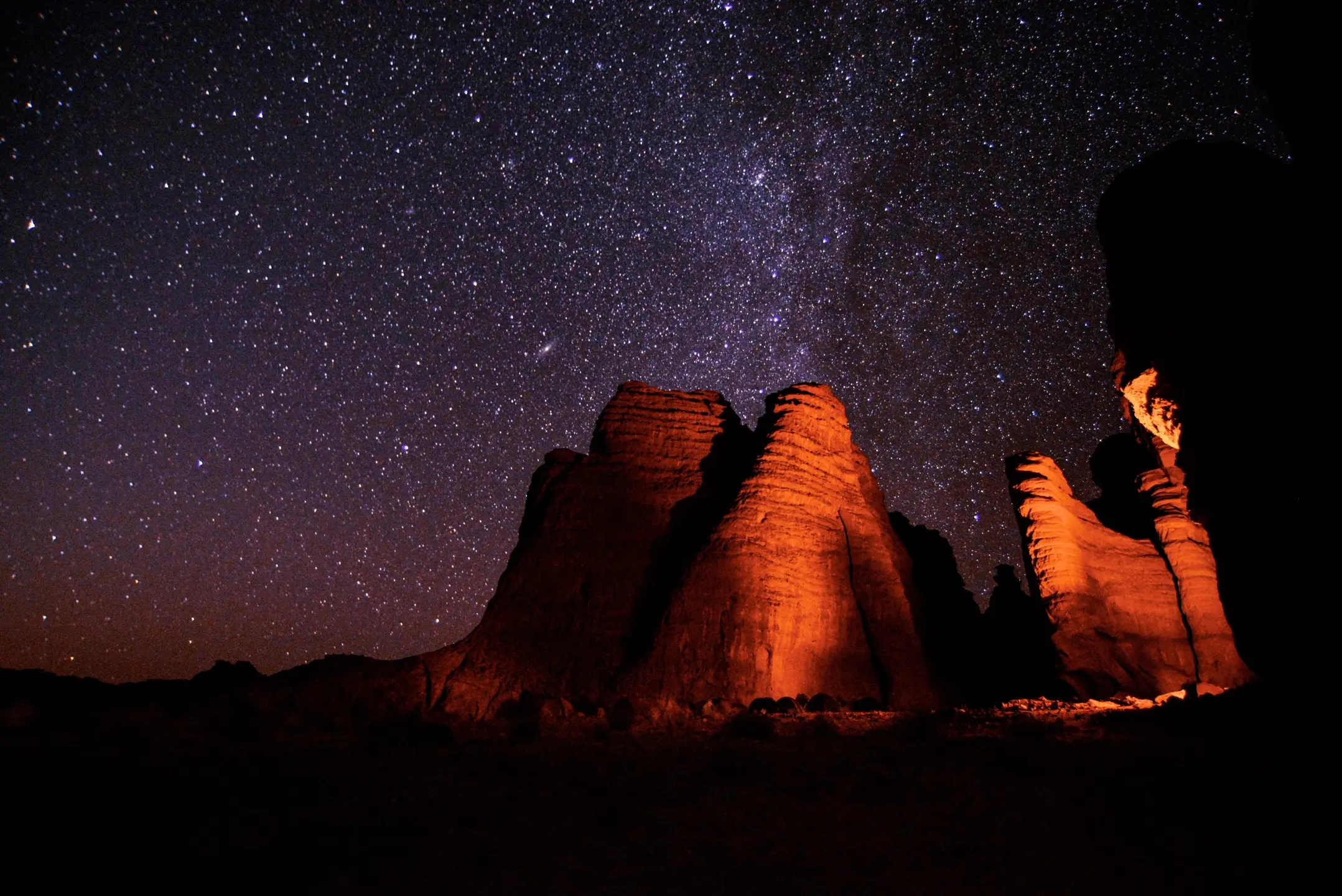
Djanet is also a spiritual and cultural anchor. It hosts Tuareg music and dance, storytelling under the stars, and ceremonies that connect the people to the land. The surrounding area is dotted with rock paintings and carvings, many hidden in the canyons and cliffs just beyond the town.
For travelers, Djanet is not just a place to pass through, it is a destination where the desert’s soul first reveals itself, inviting you to slow down, look closely, and feel deeply before heading deeper into the wilderness of Tadrart Rouge.
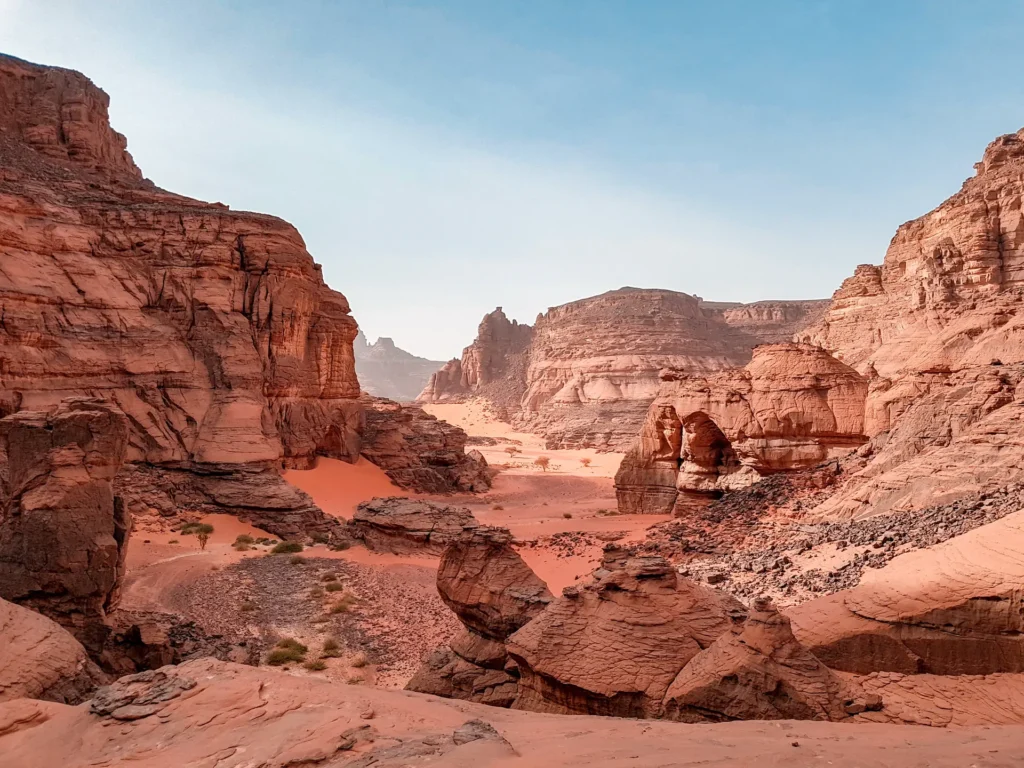
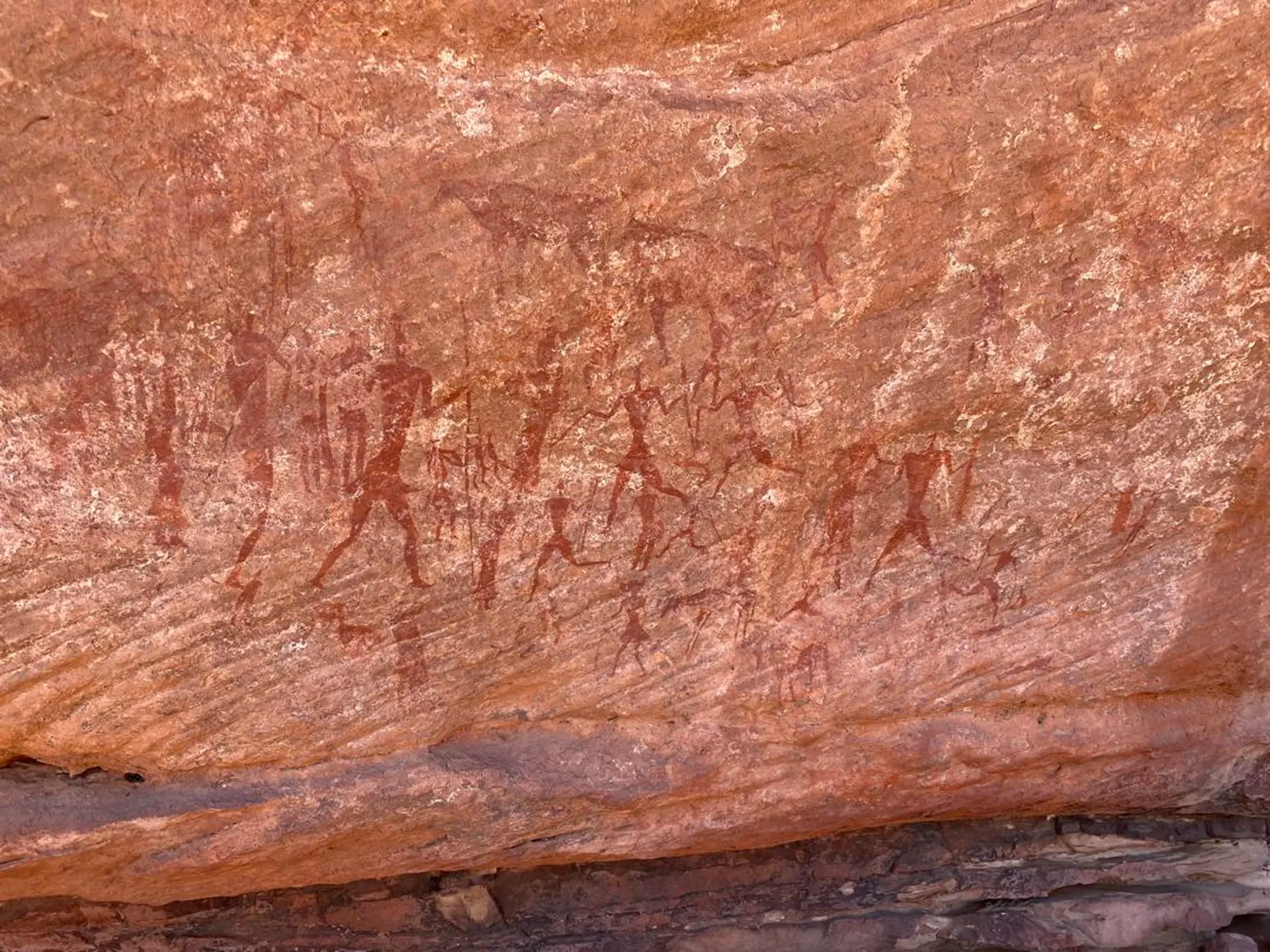
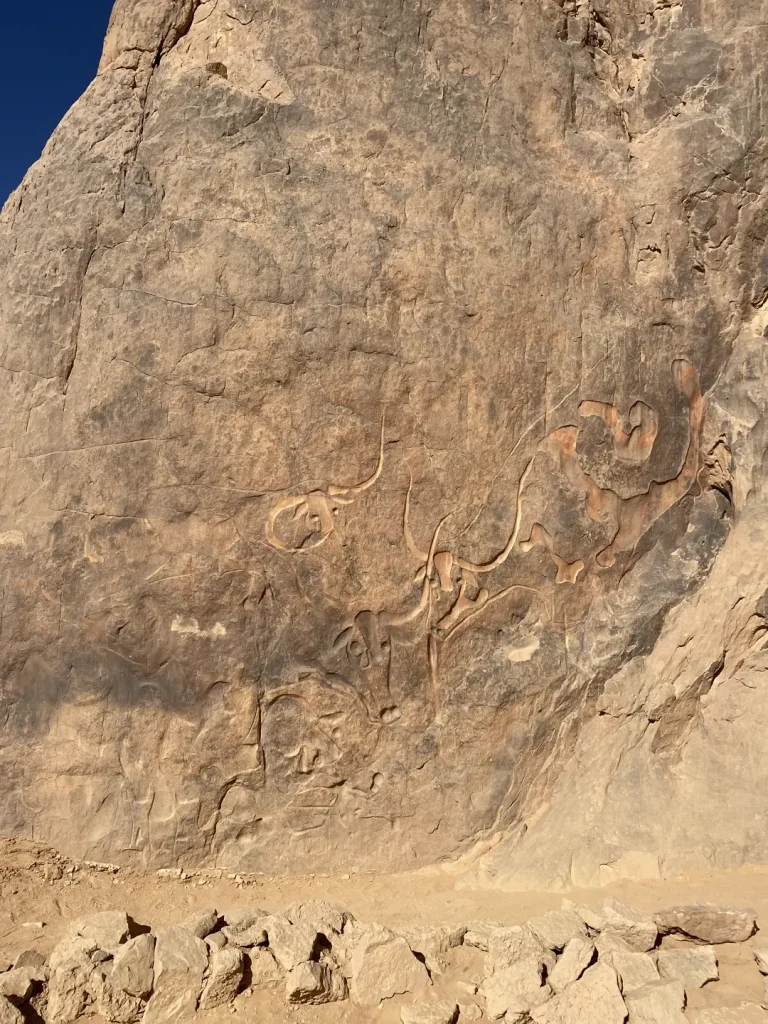
Tucked within the towering rock formations of the Tadrart region lies Tegharghert, one of the most iconic prehistoric art sites in the entire Sahara. Its name may be unfamiliar, but its most famous image, the “Crying Cow”, is known by archaeologists and desert travelers around the world. This rock engraving, estimated to be over 7,000 years old, depicts a cow shedding human-like tears, a symbol of deep emotion, mystery, and the lost green era of the Sahara.
Tegharghert is not just one carving. The site is surrounded by walls of petroglyphs and paintings, offering a powerful window into a time when this desert was once a lush savannah. Scenes of elephants, giraffes, hunters, cattle, and ceremonial dances reveal a way of life completely different from what we see today, and yet beautifully preserved by the dry air and isolation of the region.
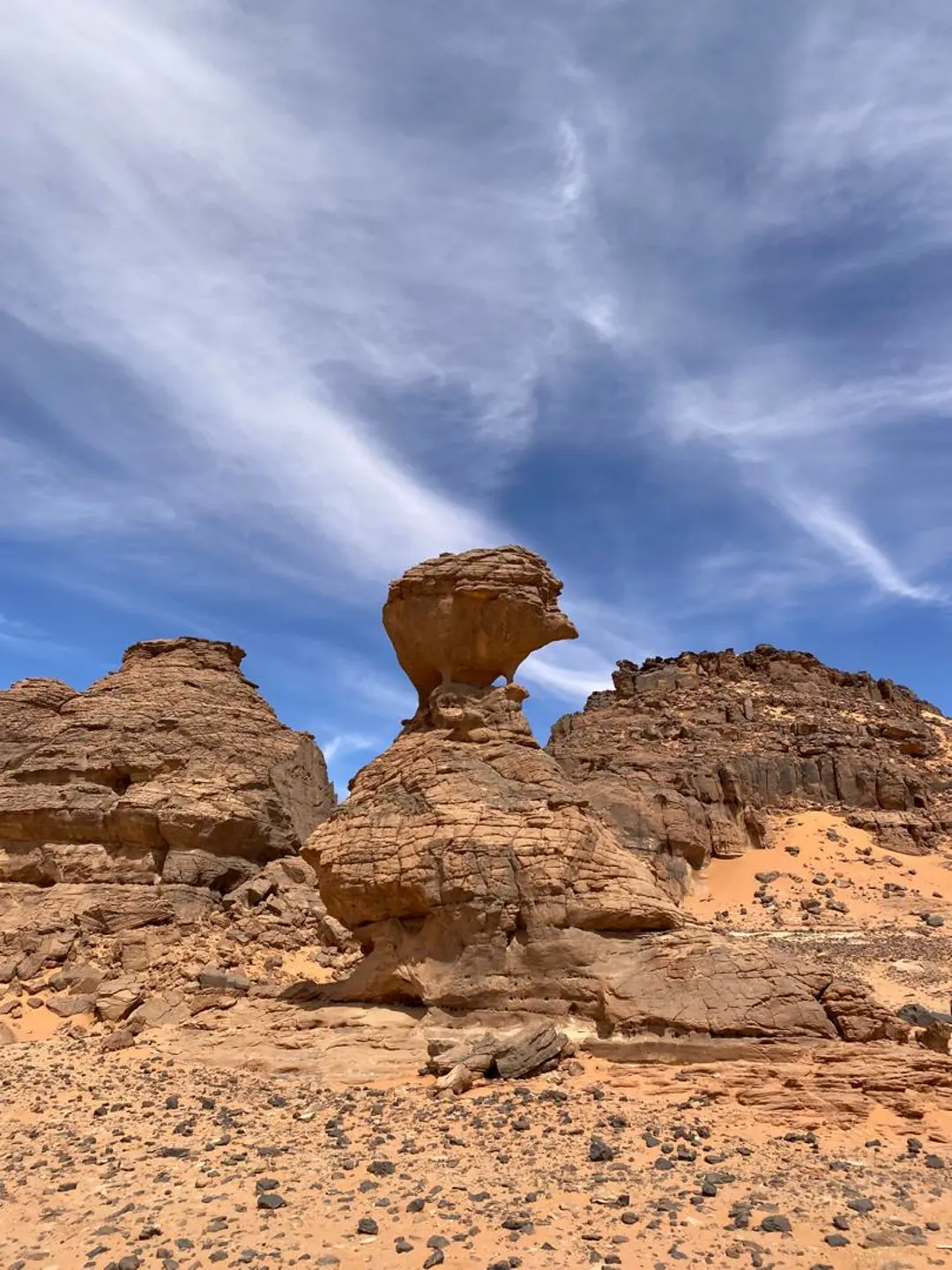
Beyond the artwork, the landscape of Tegharghert is striking. Eroded sandstone cliffs form natural shelters and open-air galleries. The quiet here is overwhelming, broken only by the wind brushing over the rocks. As the sun moves across the sky, the colors shift from gold to red to deep purple, casting the carvings in ever-changing light.
Tegharghert is a spiritual and artistic treasure, not just for Algeria, but for humanity. It connects us to our distant ancestors, and to the powerful emotions they felt as their world slowly turned to sand.
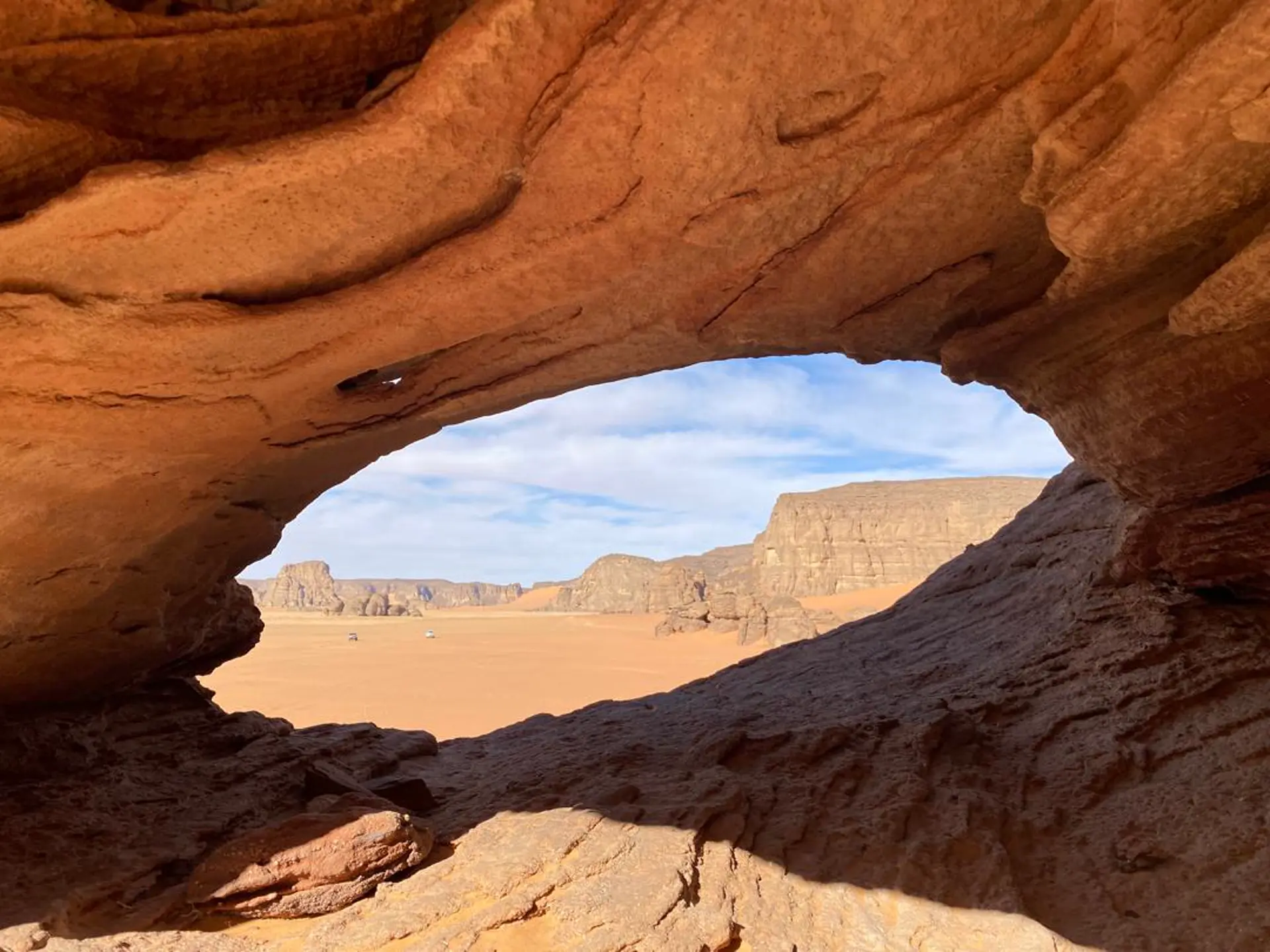
Tikoubaouine is one of the most visually striking areas of the Tassili n’Ajjer, where smooth sand dunes meet towering rock arches in a surreal and breathtaking fusion. This stop offers some of the most photogenic landscapes of the entire tour, a perfect balance between the soft curves of the desert and the sharp edges of timeworn stone.
As you arrive, one of the first sights to catch your eye is a massive natural arch, standing proudly among scattered sandstone formations. It feels like a portal between worlds, and many travelers pause here to take in the silence and scale of the desert around them. The rock shapes are dramatic and ever-changing, forming towers, shelters, and silhouettes that shift with the light.
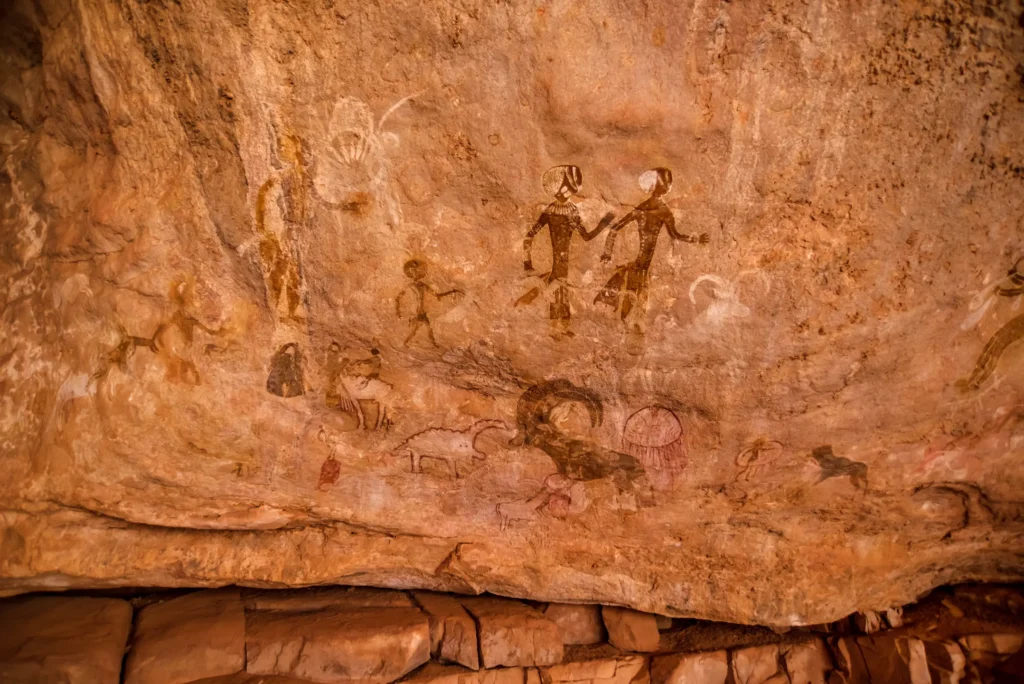
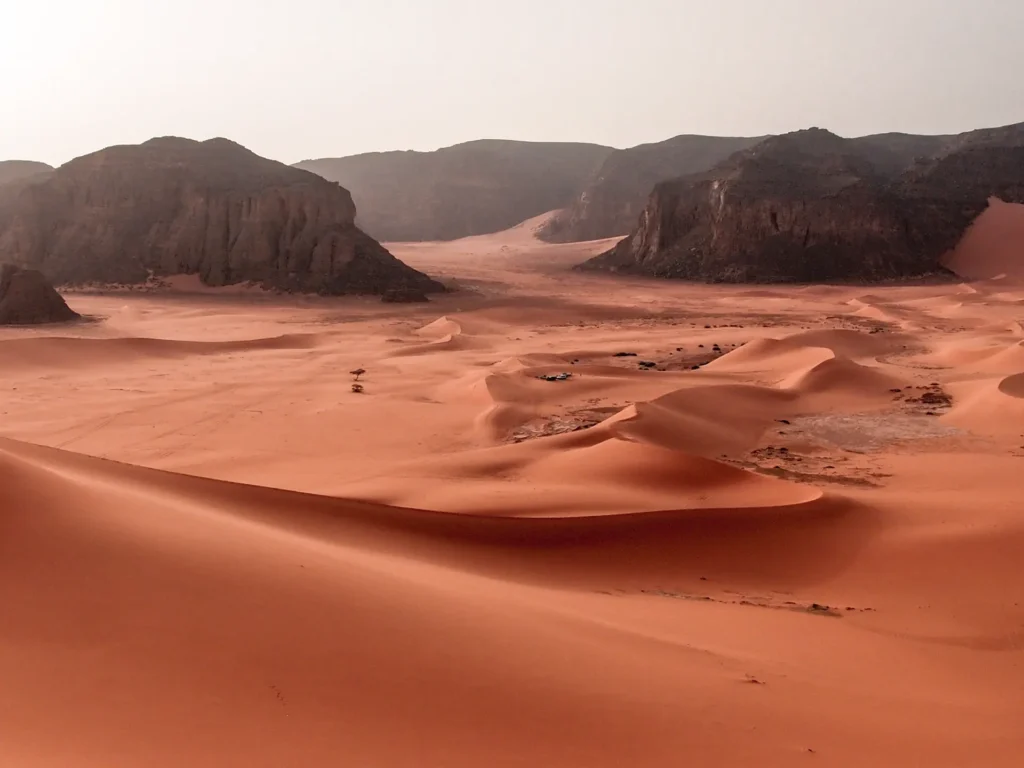
Tikoubaouine is also known for its prehistoric rock paintings, often hidden in the shaded hollows of the cliffs. These artworks speak of a time when herds roamed the valleys and humans lived in close rhythm with nature. Some of the paintings are so well preserved that the brushstrokes and details still feel alive.
Hiking through Tikoubaouine offers moments of both excitement and peace. The terrain is varied, the air is clean, and the play of shadow and light throughout the day creates an almost cinematic experience. It is a place that inspires the imagination, where nature’s artistry is on full display.
Whether you’re an adventurer, a photographer, or simply someone in search of beauty, Tikoubaouine leaves a lasting impression, a gateway into the deeper wonders of the Sahara.
Tucked between rocky cliffs and shadowed canyons, Essendilène is a true wonder of the Sahara, a lush and peaceful gorge where clear water flows through narrow valleys, feeding palm trees, wild grasses, and flowering shrubs. In a land dominated by rock and sand, Essendilène feels like a secret garden, calm, green, and alive.
As you make your way into the gorge, you’ll hear the quiet trickle of water long before you see it. A small stream winds through the canyon floor, collecting in shallow pools beneath natural stone bridges and towering walls. The air here is cooler and more humid than the surrounding desert, making it a favorite rest stop for both travelers and wildlife. The shade, the water, and the stillness offer a rare feeling of peace in the middle of the Sahara.
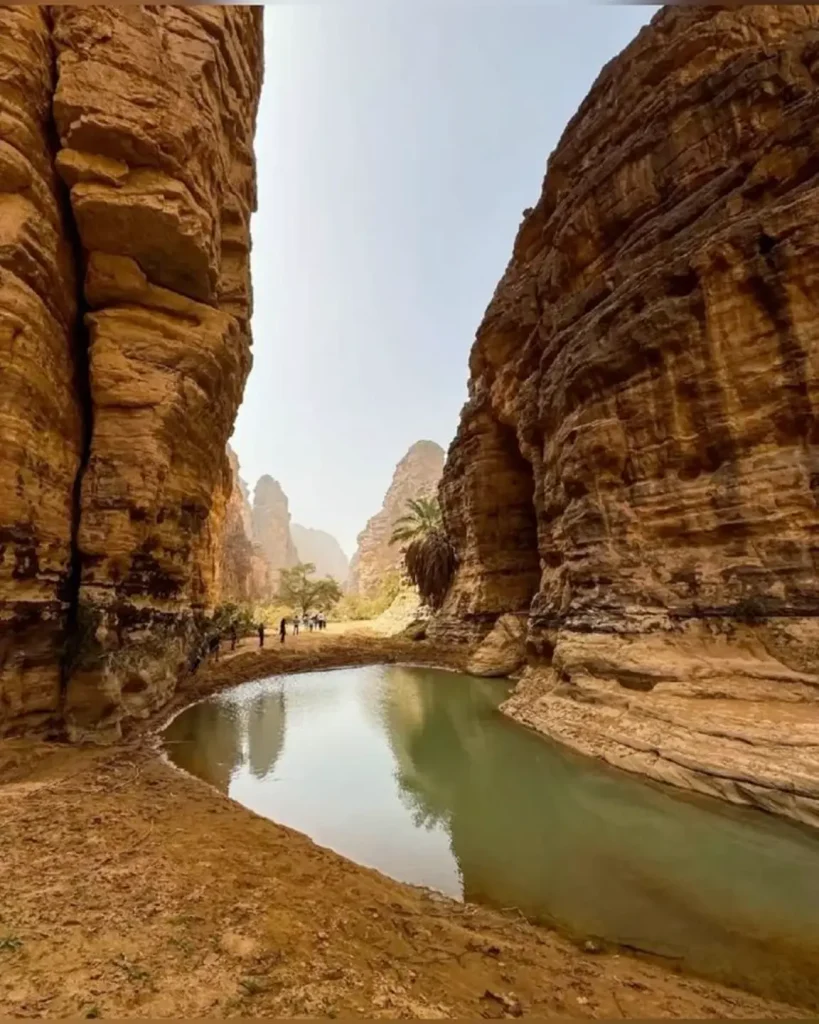
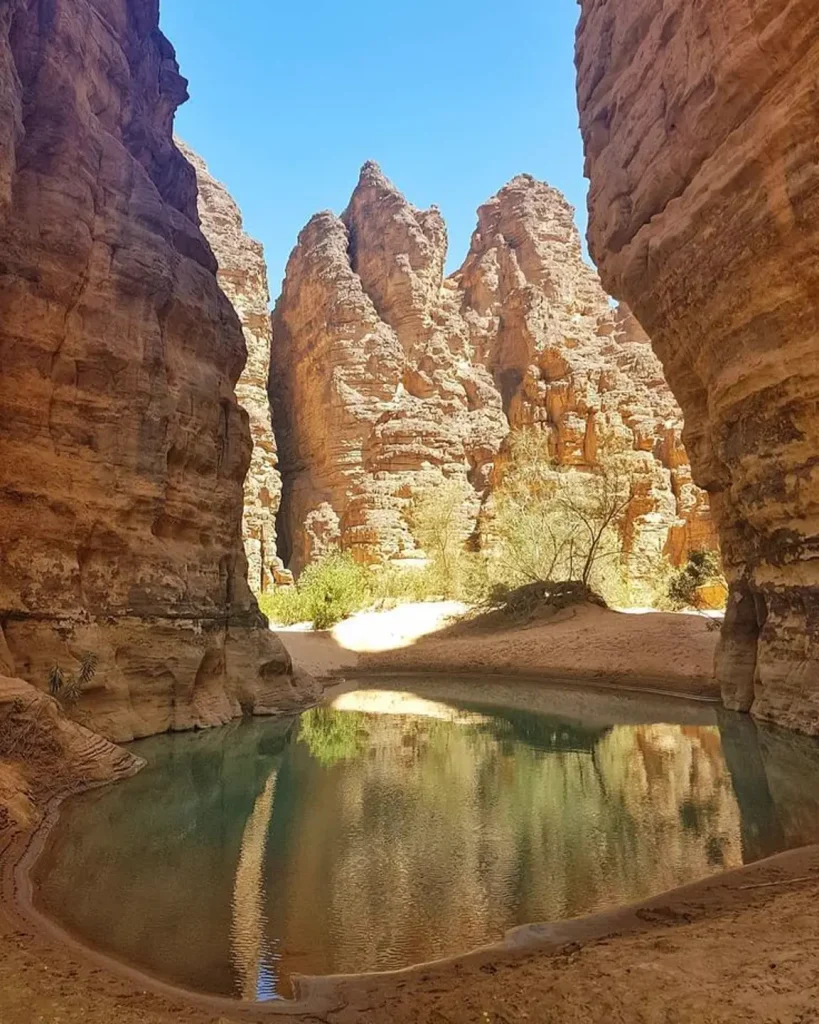
Essendilène is also home to ancient rock paintings and engravings, found in overhangs and narrow caves along the cliffs. These images, of cattle, wild animals, and people, tell stories of a time when this land supported entire communities. The combination of natural beauty and human history gives this place a quiet spiritual energy, where the past feels close.
Many visitors describe Essendilène as a place that stays with them long after they’ve left. Whether you’re walking along the water’s edge, sitting beneath a palm tree, or admiring the play of light on the canyon walls, you’ll feel something timeless here, a sense of wonder that only nature can offer.
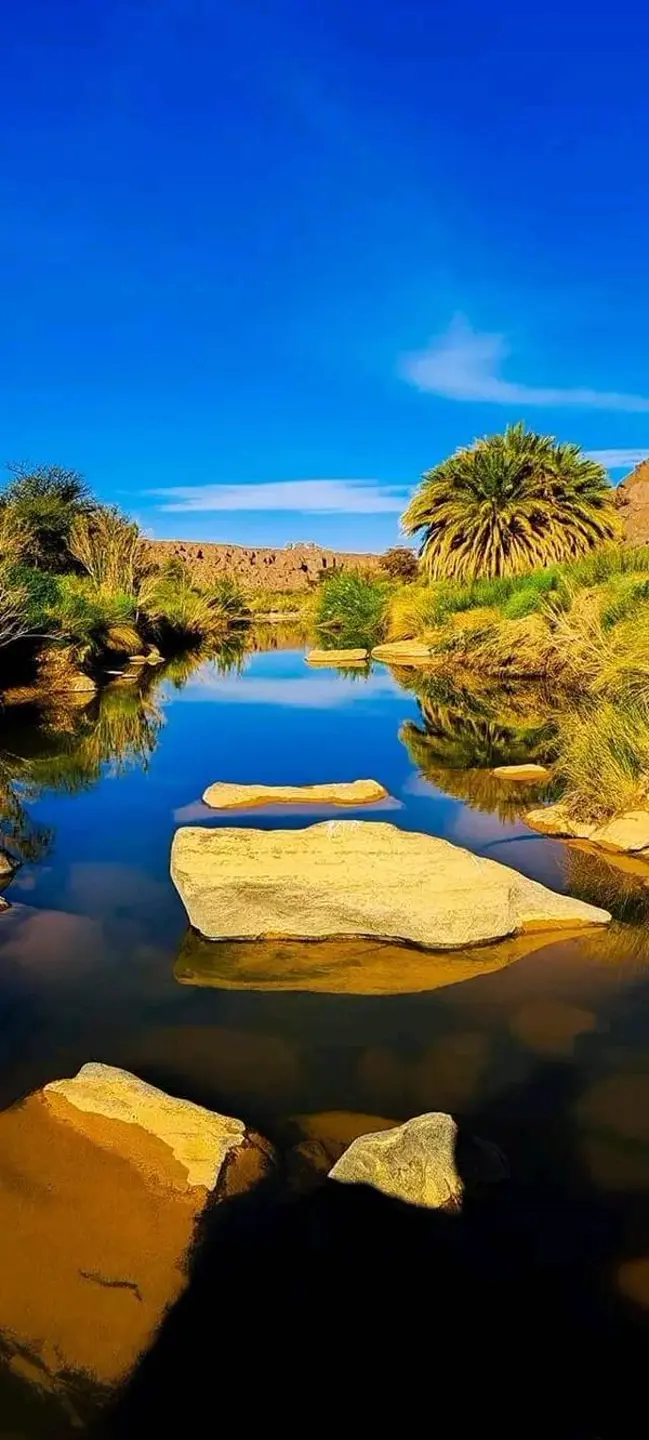
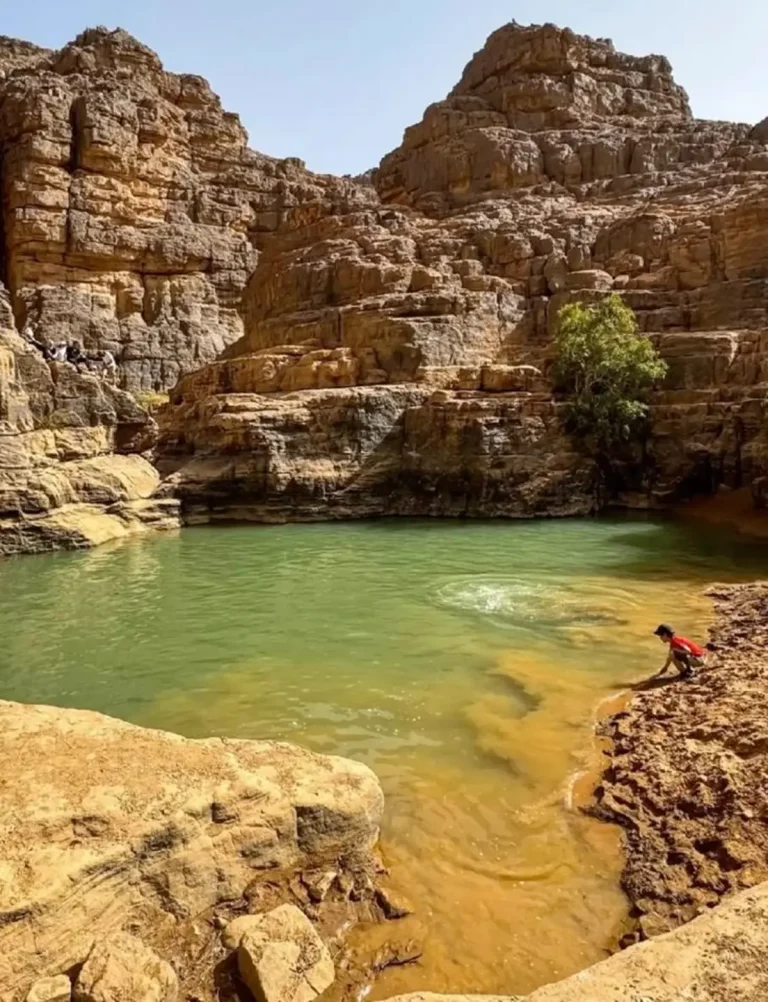
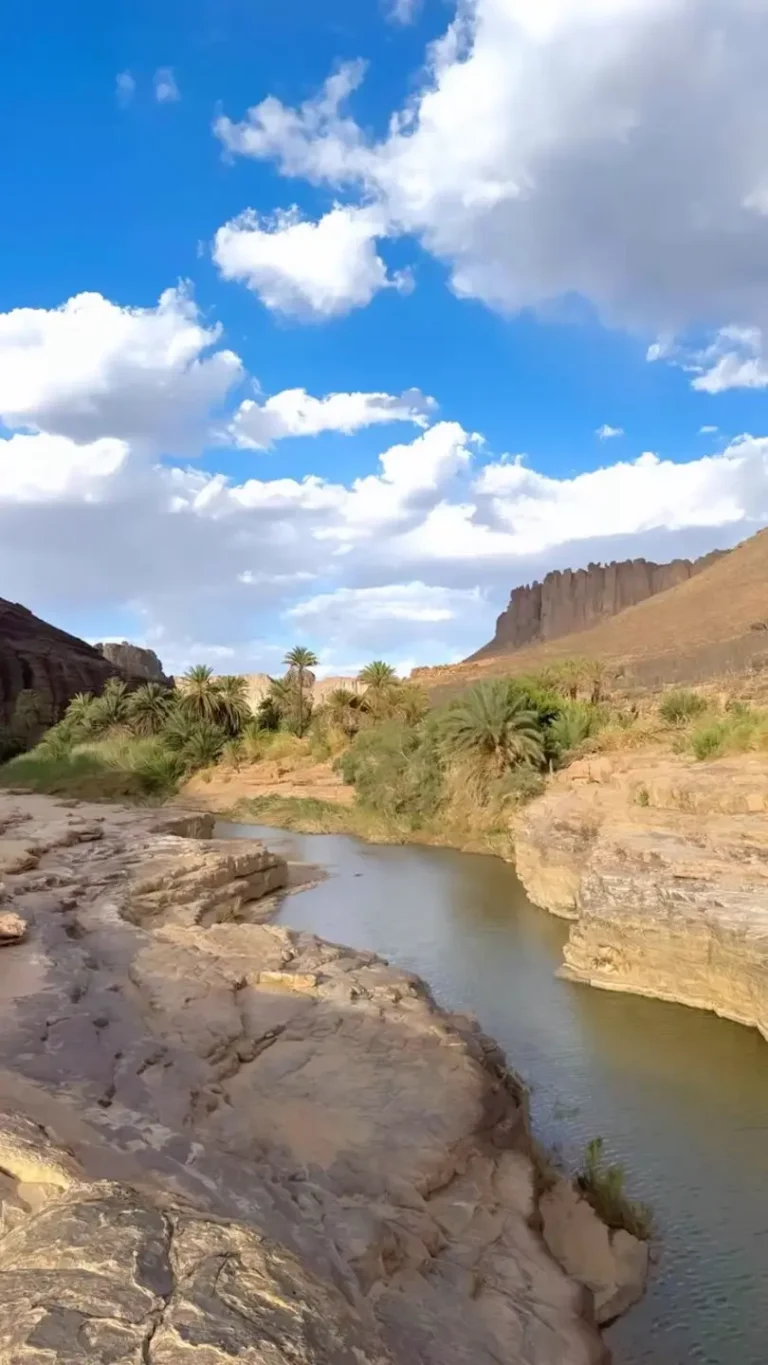
Nestled deep within the Tassili n’Ajjer mountains, Iherir is more than just a stop, it is the beating heart of the entire valley. This remote oasis, surrounded by rugged cliffs and golden plateaus, is where nature, culture, and history come together in perfect balance. Here, the desert doesn’t feel empty, it feels alive.
Iherir is known for its permanent water sources, fed by underground springs that allow vegetation to flourish all year round. Palm groves, acacia trees, and patches of green meadows line the rocky riverbed, creating a stark and stunning contrast against the surrounding desert. The sound of birdsong and running water gives the area a rare sense of tranquility.
The village of Iherir is small and traditional, inhabited by Tuareg families who have preserved a way of life deeply connected to the land. Visitors are often welcomed with quiet warmth and invited to experience the rhythms of local life, from preparing food to listening to stories around a fire under the stars. It’s a place of humility, community, and reflection.
All around the village, you’ll find prehistoric rock art, some of the finest in North Africa. These paintings, many thousands of years old, show scenes of hunting, dancing, and herding, a visual archive of ancient civilization. Iherir is not just a beautiful place; it is a living museum, where human history and natural beauty are preserved side by side.
For those who reach it, Iherir offers something rare: a feeling of connection. To the land. To the past. And to something larger than yourself. It is a powerful end to a journey through one of the Sahara’s most magical regions.